

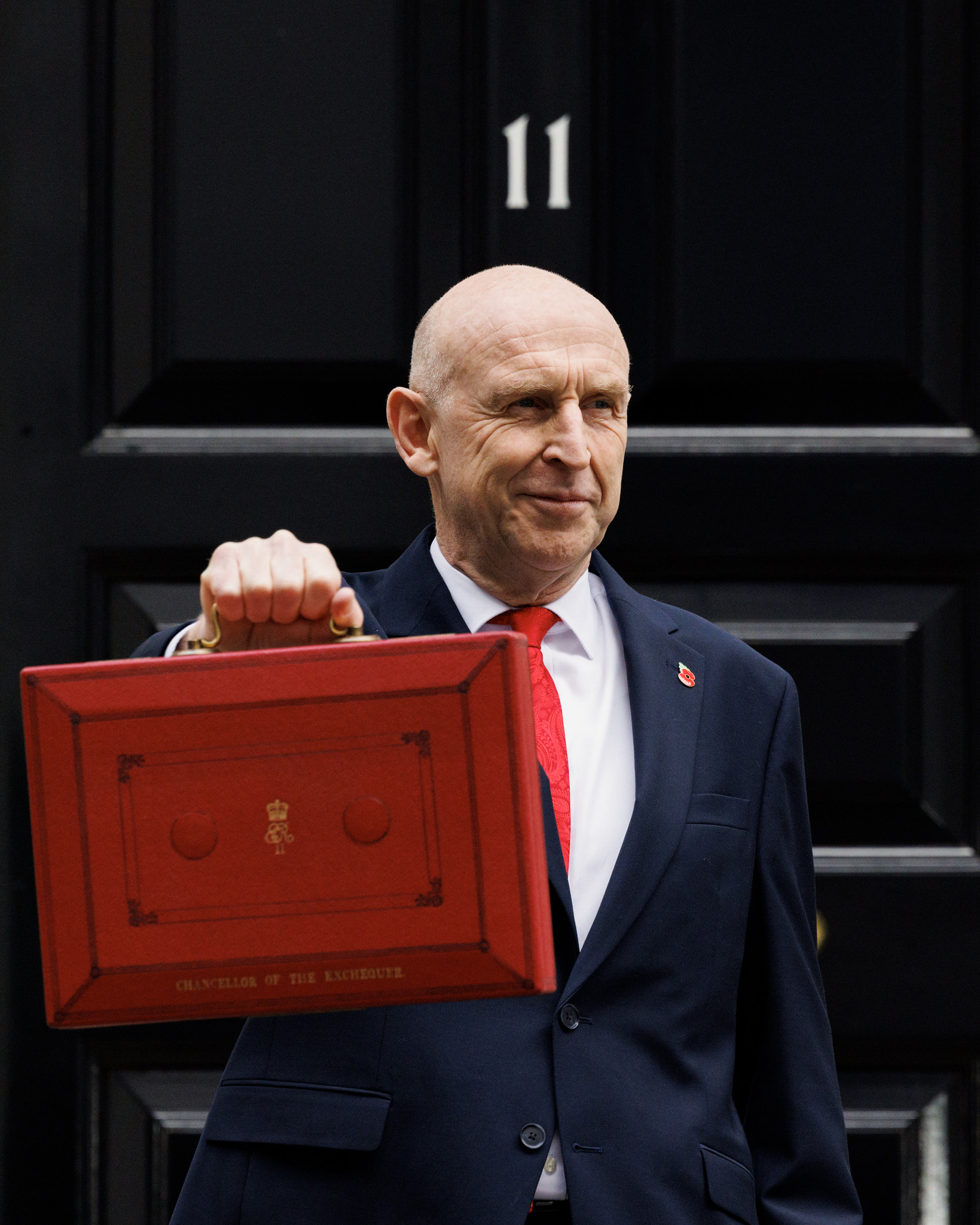
The chancellor’s first Budget extends the VAT cut on electricity and doubles the bank surcharge, as the official forecaster cuts next year’s growth outlook to 1%.
Around 20 million households will receive a £100 payment towards their energy bills this winter, chancellor John Healey announced in his first Budget on Wednesday.
Homes in council tax bands A to D will have the money paid into their bank accounts, at a cost of £2.6bn, as rising energy prices linked to the war in the Middle East squeeze family finances.
“Let me say this to families at home. I know that with the conflict in the Middle East, rising energy bills are a real worry,” Healey told MPs. “I know that people look to government at times like this, not to solve all their problems, but to give them a bit of breathing space.”
Healey also extended the cut to VAT on electricity until July, which takes about £50 off the annual price cap. The cap, which sets most household bills, is expected to rise sharply in January because of high oil and gas prices.
The chancellor has said scrapping standing charges on gas bills will save 60% of households £45 a year. He also promised “a new cost control framework, to drive down all aspects of energy bills”, including moving clean energy costs off bills.
The fuel duty cut will stay in place until July 2027, cancelling rises planned by his predecessor, Rachel Reeves.
“For millions of people, the cost of living and the cost of doing business are the same. The home is the office. The van is the family car,” Healey said.
The energy package will be funded largely by banks. Healey is doubling the surcharge banks pay on their profits from 3% to 6% for 15 months from January, short of the rise to 8% that some in the industry had expected.
Bank shares rose after the announcement, with NatWest and Standard Chartered up more than 4%. “I want to say directly to our banks: I celebrate and I am grateful for the role that you play,” Healey said.
He also announced a 2 percentage point rise in income tax for landlords and savers, and higher taxes on gambling and vape shops.
Healey said his choices meant he had “kept the Labour manifesto promise not to raise tax on working people”. The fact-checking charity Full Fact already rates that pledge as “not kept”, because of Reeves’s decision last year to extend the freeze on income tax and National Insurance thresholds until 2031.
Healey blamed the conflict in the Middle East for a weaker economic outlook. “Analysts like to speak of economic headwinds, but what we face today are global economic storms,” he said.
The Office for Budget Responsibility (OBR) cut its growth forecast for 2027 to 1%, from 1.6%, while raising this year’s forecast slightly to 1.2%. It expects inflation to average 3.5% next year, up from the 2% it forecast in March, and no growth in real earnings.
Higher inflation will add £14bn to the government’s interest costs, Healey said. The OBR said the tax burden would rise sharply to a record 37.9% of GDP in 2027-28, peaking at 38.6% at the end of the forecast period.
The government remains on course to meet its main fiscal rule, balancing day-to-day spending with tax receipts by 2029-30, but with a margin of £15bn, £7bn less than at last year’s Budget. The OBR put the chance of hitting the target at 56%.
“That is what a buffer is for. Use it when you need it, rebuild it when you can,” Healey said, promising to restore the cushion to £22bn by 2030-31.
The minimum wage will rise by 3.9%. Retail, hospitality and leisure businesses will benefit from a rise in the business rates relief threshold from £12,000 to £18,000.
A new first-time buyer Isa will replace the lifetime Isa, and Healey confirmed the My First Home mortgage scheme first floated at Labour’s party conference in September. He also reversed a planned cut to the cash Isa allowance.
On homelessness, which he called a “moral mission”, Healey announced cheaper borrowing for councils, VAT relief on land sold to social housing providers and an extension of funding to tackle rough sleeping.
Other measures included a new tax relief for people who set up successful businesses and what Healey called a “new deal for datacentres”.
Healey said next year’s spending review would set a target date for raising defence spending to 3% of GDP by 2030, on the way to 3.5% by 2035.
Nato secretary general Mark Rutte welcomed the pledge, saying on X that it put the UK “on a credible path” towards the commitment made by all Nato allies.
Conservative leader Kemi Badenoch dismissed the Budget as underwhelming. “The prime minister came in promising to reverse 40 years of neoliberalism. Instead, we got 4p off gherkins,” she said.
“We are overspent, overborrowed, overtaxed, and drowning in an out-of-control welfare system, and this is his answer,” she told MPs.
She said Healey should have cut welfare to pay for defence, and claimed Prime Minister Andy Burnham was putting off difficult decisions to keep open the option of an early general election.
On defence, she said: “What we have is a plan to have a plan. I bet Putin’s really scared now.”
Investors welcomed a low-drama Budget. UK government borrowing costs fell slightly, with the yield on 30-year gilts down 0.04 percentage points at 5.698%, further below the 28-year high above 6% reached earlier this month.
“The gilt market wanted dull and they got exactly that,” said Matthew Amis, investment director at Aberdeen.
The OBR warned that mortgage holders face a growing squeeze. It forecasts the average interest rate on outstanding mortgages will rise from 4% this year to 5% in 2031, as borrowers come off fixed deals agreed when rates were lower.
The payment is for households in council tax bands A to D. You can check your council tax band on the government’s website.
Adam Rolfe, policy and public affairs officer at Money Wellness, said the quick payment would help, but called council tax bands “a blunt way of working out who needs it most”, since some low-income families live in band E homes.
He warned that money paid into an overdrawn account could disappear into the overdraft, and that scammers targeted similar payments in the past. “Your council will never text you asking for your card or PIN, so if you’re unsure, contact the council directly,” he said.
Suspected scam messages can be reported to Action Fraud.