

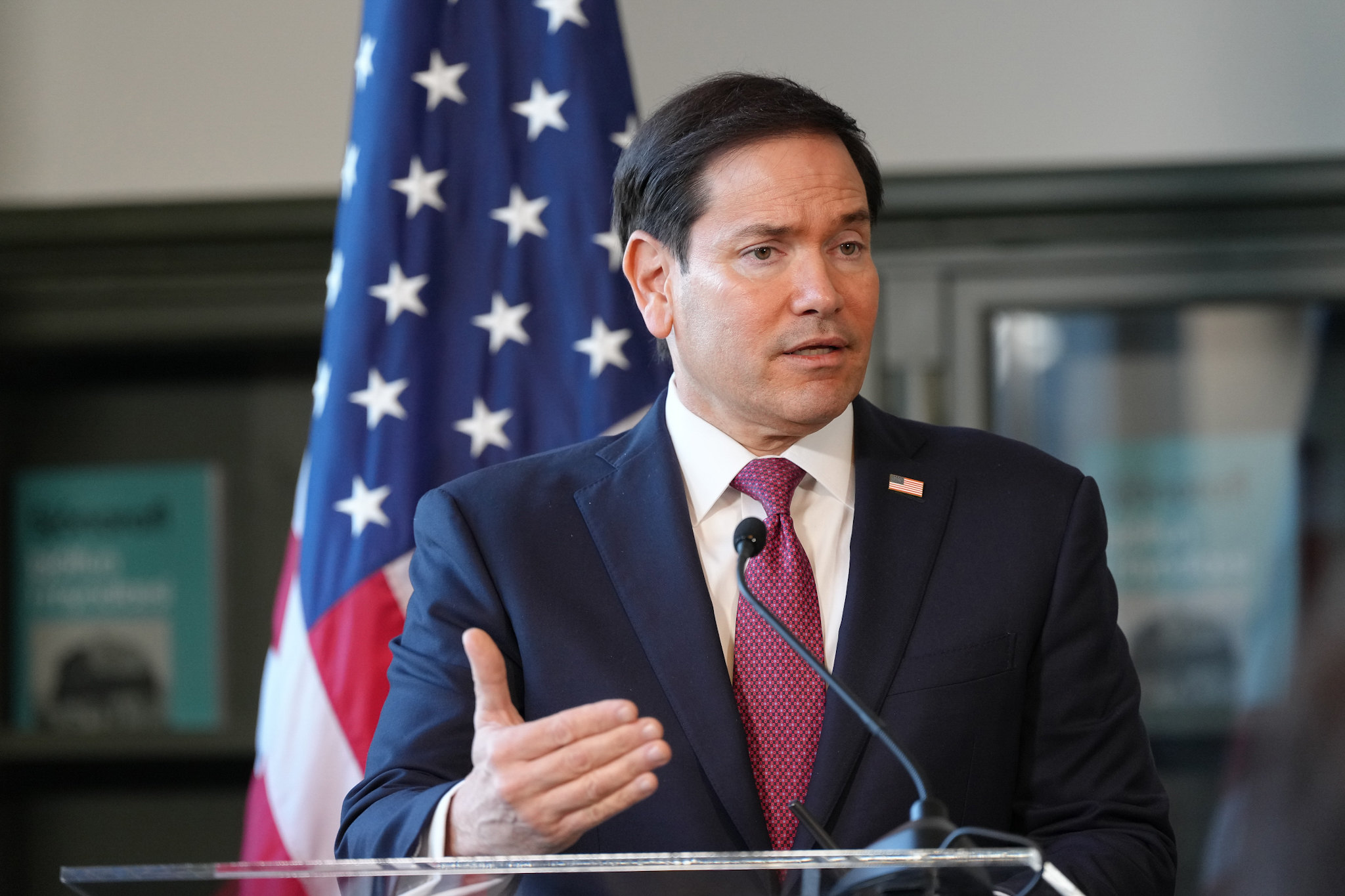
Secretary of State Marco Rubio called the tribunal a “rogue court”, while the ICC urged the countries that created it to come to its defence.
The US imposed sanctions on the International Criminal Court on Friday, hours after one of its former judges, Navi Pillay, was awarded the Nobel Peace Prize.
The measures go further than earlier US action against individual court officials. They could punish companies that provide services to the court itself, and put Washington at odds with European allies that are among the tribunal’s strongest backers.
The court called the sanctions an “assault on the rule of law and on the very foundations of the international legal order” and urged its 125 member states to act.
“The Court cannot stand alone. Its fate now rests also in the hands of the states that created it,” it said in a statement. “This is not just about defending a single institution, but about safeguarding the international order grounded upon the rule of law. History will judge this moment.”
Nazhat Shameem Khan, the ICC’s deputy prosecutor, said the sanctions were “intended to undermine the rule of law internationally and the work that an independent judicial institution is doing”.
“Our work will continue across all our situations, our investigations and our prosecutions,” she told Reuters.
“President Trump will never allow the International Criminal Court to prosecute Americans,” Rubio said in a statement. “That is why, today, the United States is sanctioning the International Criminal Court.”
“We will ban transactions with this rogue court, cutting off their resources and crippling its ability to operate,” he said.
The US Treasury announced the sanctions with an initial six-month grace period. Some transactions will still be allowed, including those for telecoms, software, pension payments and matters relating to detainees.
Rubio said the sanctions were designed to give the court and its member states a chance to address US concerns, and would be adjusted if those demands were not met.
He said Washington had delayed the measures in the hope that the ICC and the countries that have ratified its founding treaty, the Rome Statute, would act, but they had failed to do so.
“Either the ICC will end its threats, or we will end the ICC,” Rubio said. “We expect our allies, many of whom are part of the ICC and that rely on American service members for their defence, to rein in the court.”
Washington has condemned the ICC over its arrest warrants for Israeli officials, including Prime Minister Benjamin Netanyahu. It has also objected to a past investigation into the conduct of US soldiers in Afghanistan, which the court says it has “deprioritised”.
Neither the US nor Israel is a member of the court, and both reject its jurisdiction over their citizens.
Trump imposed targeted sanctions on court officials during his first term, and they were lifted under President Joe Biden. His administration ordered new sanctions in February 2025, weeks after he returned to office, and has since applied them to the court’s prosecutors and judges.
Shameem Khan was among the officials sanctioned by Washington last year.
US sanctions typically bar all US-based companies from working with a sanctioned organisation. That forces banks to close accounts, insurers to end cover and software firms to stop providing services.
Court officials have spent months preparing for sanctions on the institution itself. They have moved office computers from Microsoft software to open-source alternatives and made new arrangements for banking and health insurance.
Earlier this week, the court’s registrar, Osvaldo Zavala Giler, called on the EU to be ready to use its so-called blocking statute. The mechanism is designed to shield people and companies in the EU from the effects of foreign sanctions applied outside the sanctioning country’s borders.
The Norwegian Nobel Committee awarded the peace prize earlier on Friday to Pillay, a South African jurist who sat on the ICC’s Appeals Chamber from 2003 to 2008.
The committee said the award was a gesture of support for international courts at a time when “judges and institutions of international law are under political attack”.
“An international legal system in which war criminals are held to account and the victims of abuse see justice served is a precondition for a peaceful world,” it said.
Before joining the ICC, Pillay was a judge and later president of the International Criminal Tribunal for Rwanda. She went on to serve as the UN high commissioner for human rights from 2008 to 2014.
More recently, she chaired a UN commission of inquiry that concluded in September 2025 that Israel had committed genocide in Gaza. Israel rejected the finding.
The court, founded in 2002 to prosecute war crimes, crimes against humanity and genocide, has publicly indicted more than 70 people, including world leaders and major figures in global conflicts.
As well as Netanyahu, it has sought the arrest of senior Hamas figures. Others indicted include Russian President Vladimir Putin, former Sudanese president Omar al-Bashir and the late Libyan leader Muammar Gaddafi.
Charges against Kenyan President William Ruto and his predecessor, Uhuru Kenyatta, were withdrawn.
The court is based in The Hague in the Netherlands. Its members include nearly every EU and NATO country, with the US and Turkey the most prominent NATO members outside it.