

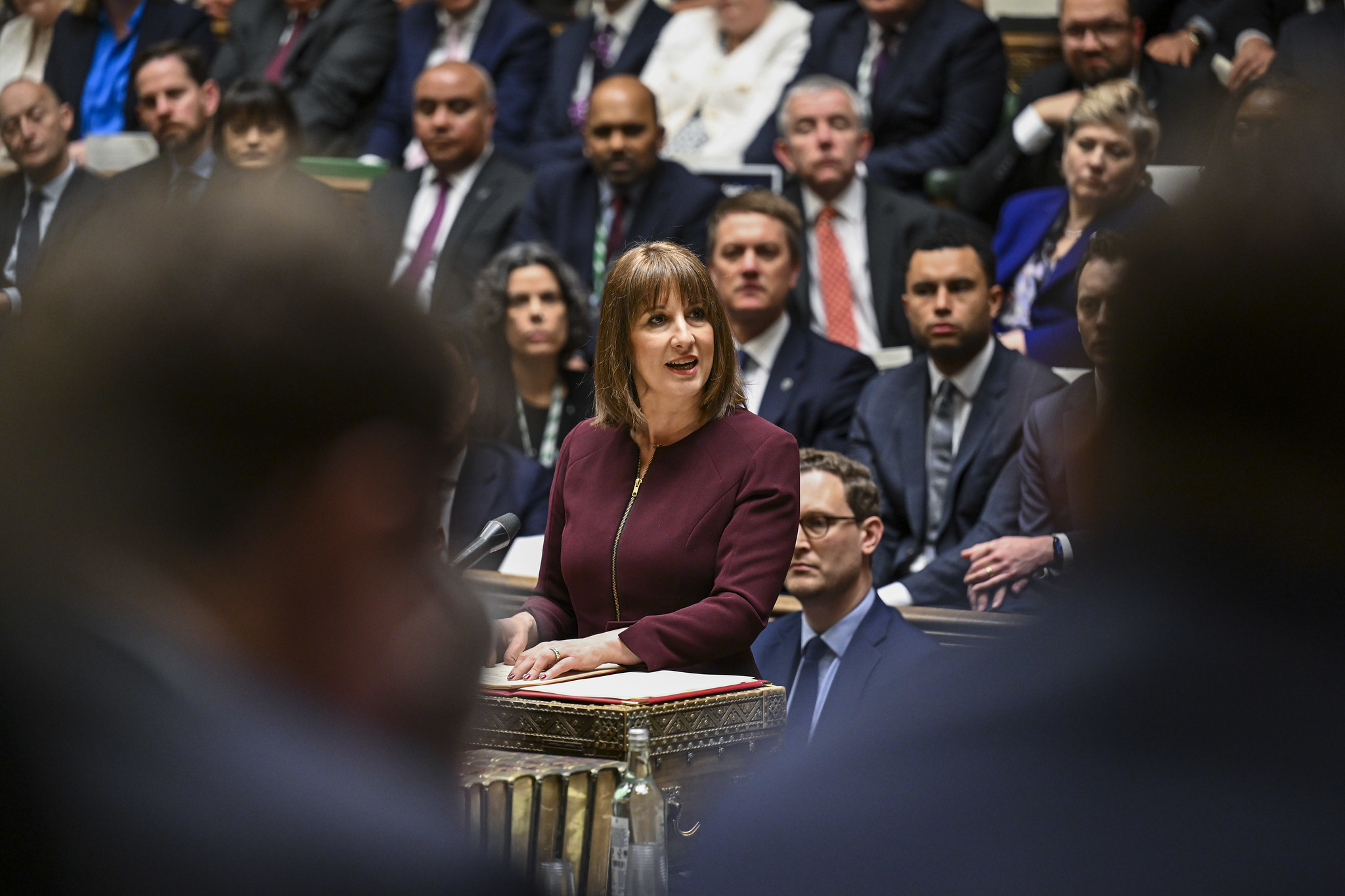
In her first major speech since leaving the Treasury, the former chancellor said her tax rises cut borrowing and mortgage costs, and called for Britain to rejoin the EU.
Rachel Reeves has defended the £66bn of tax rises in her two Budgets, saying they made Britain’s economy stronger and saved some families up to £800 on their mortgages.
In her first major speech since Andy Burnham removed her as chancellor, Reeves told an audience at Harvard University on Monday that the increases were “difficult choices” and “not without controversy”, but were needed to end Britain’s “failed austerity experiment”.
“In my two Budgets, I raised taxes to build a stronger fiscal buffer and to invest in public services,” she said. “There was no way to raise revenue on the scale required which would be free of pain.”
Reeves said she had deliberately placed the burden on businesses and richer households, to “shift the tax system towards rewarding work, enterprise and investment, rather than the passive accumulation of wealth” and to break Britain’s “low-wage, low-investment cycle”.
“Many disagreed with those decisions then. Many still do. But without them, the UK economy would have been weaker,” she said.
Citing Treasury modelling, she said that without her decisions the government would have had to borrow an extra 1% of GDP this year, about £30bn.
That would have pushed up interest rates, she argued, adding up to £800 to mortgage payments for a family taking out a £200,000 two-year fixed-rate deal.
Her most controversial measure was a £25bn increase in employers’ National Insurance contributions. The rate rose from 13.8% to 15%, and the salary threshold at which employers start paying fell from £9,100 to £5,000.
Business leaders warned at the time that the rise would hurt jobs and investment. Bank of England governor Andrew Bailey has since said it helped push up prices and raise unemployment.
By the end of 2025, while Reeves was still chancellor, the unemployment rate had risen to 5.2%, its highest level in five years.
Her first Budget raised taxes by £40bn and public spending by around £70bn a year, and left borrowing about £28bn a year higher over the following five years, according to the Office for Budget Responsibility.
After her 2025 Budget, the OBR forecast that the tax burden would reach a post-war high of 38.3% of economic output.
Reeves argued that her decisions had allowed her successor, John Healey, to offer cost-of-living support in last week’s Budget.
She said he had been able to use almost half of the £24bn buffer she built to absorb the economic impact of the war with Iran. Healey’s Budget left the government with £15bn of headroom against its main fiscal rule.
Reeves also renewed her call for Britain to rejoin the EU, describing the bloc as the “single biggest opportunity” to raise incomes, fund public services and strengthen security.
“No agreement, with any one country or any other group of countries, can compensate for Britain’s distance from our nearest and largest trading partner,” she said.
“I firmly believe Britain’s future lies inside the European Union. Economically, it is the credible choice. Britain’s values, and a serious assessment of the geopolitical scene today, tell us it is the radical choice too.”
Her remarks come as Burnham has opened the door to closer ties with Brussels, including a debate on free movement.
The former chancellor also warned that artificial intelligence posed a major threat to Britain’s economic model.
“My worry is that we pay insufficient attention to the biggest threat to Britain’s economy today: the hollowing out of our strengths in services and other knowledge-intensive sectors, as artificial intelligence diffuses through them,” she said.
Reeves, the MP for Leeds West and Pudsey, is in the US for a series of academic talks at Harvard, where she is meeting economists including Jason Furman, a former chief economic adviser to Barack Obama, and the Nobel prize winner Claudia Goldin.
She has made several public interventions in recent days as she seeks to rebuild her standing after leaving the Treasury.