

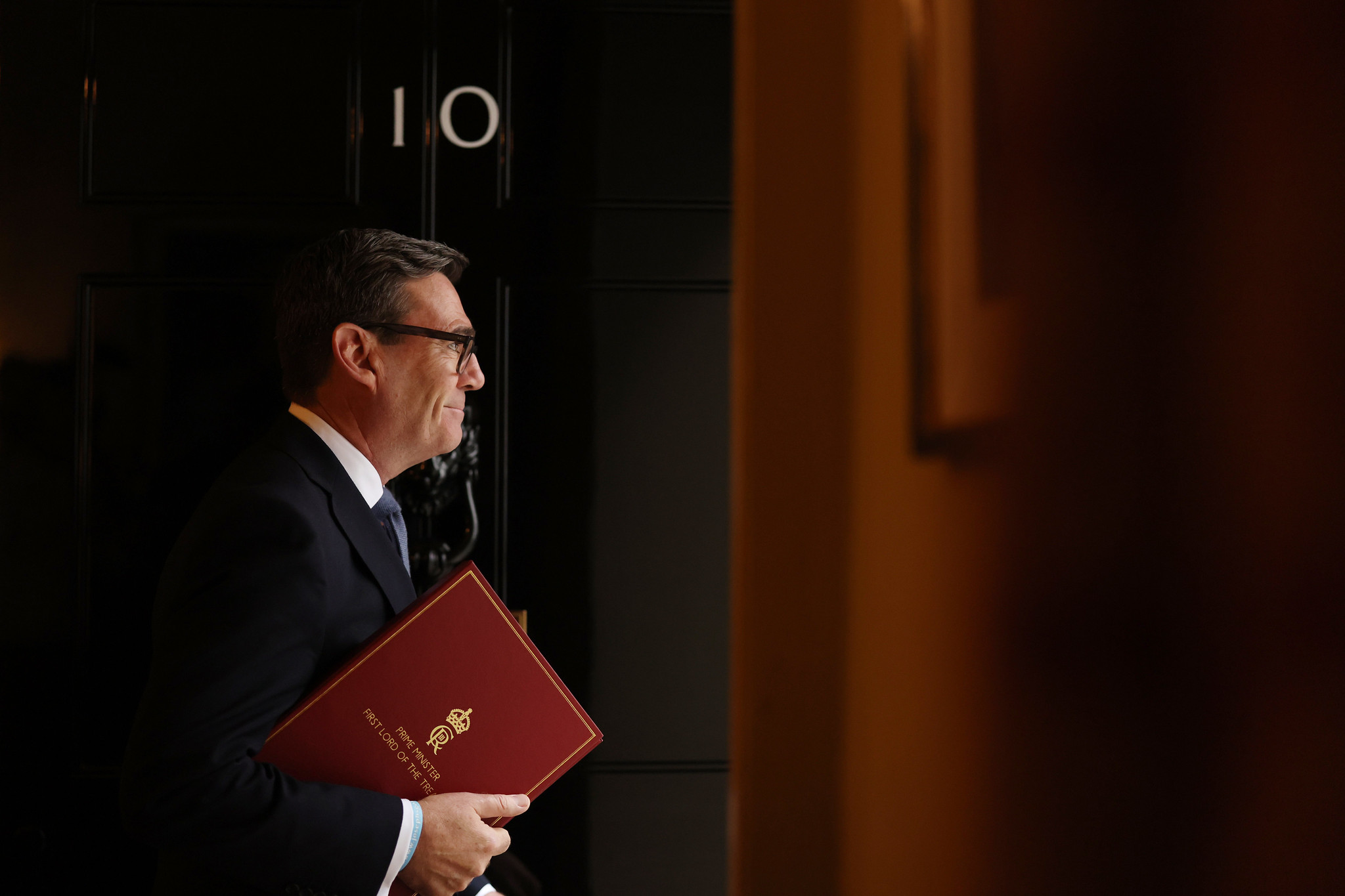
The prime minister says the change will help young people and women, and urged firms to start now. Business groups say setting pay is more complicated than putting a single figure on an advert.
Employers will be legally required to publish salaries in job adverts, Prime Minister Andy Burnham has announced, in a move aimed at helping young people into work and tackling unequal pay.
“Whether you’re a young person starting out or a parent trying to support your family, you should know what a job pays before spending your time and effort applying for it,” Burnham said. “That’s why we will make it a legal requirement for all employers to say what you pay.”
The government says it will bring forward legislation as soon as possible, but has not given a timetable. It will set out later what information adverts must include and how the rules will be enforced.
Speaking on a visit to Siemens’ rail technology centre in Chippenham, Wiltshire, Burnham urged firms not to wait for the law. He said the current system felt “weighted against the applicant” and the change was about “tilting the scales back”.
“It can be quite soul destroying for young people these days, applying for jobs when the salary is not listed but sometimes they’re not getting a reply,” he said.
Asked whether MPs advertising for staff should disclose pay, he said the rule “would apply completely to them too”. He added: “The call I’m making today is, before the law changes, do it voluntarily because it’s the right thing to do.”
Just over two in five employers always publish salary ranges, and fewer than one in five always give a specific salary, according to estimates from the CIPD, the professional body for HR, cited by Downing Street. Around 27% of employers have never included pay in their adverts.
Jobs website Adzuna said 51% of the adverts on its site in September included salary information, a share that has been falling in recent years. Its co-founder, Andrew Hunter, said employers who show pay “attract more applicants, and better-suited ones”.
A government consultation on equal pay launched in July found that 94% of respondents backed greater pay transparency. Ministers say publishing pay could “expose unjustified differences in pay” and give workers more confidence to challenge discrimination.
The measure is part of efforts to cut the number of young people not in education, employment or training, known as Neets. Nearly one million 16 to 24-year-olds, or 13%, are in that position, according to the Office for National Statistics.
Earlier this year the number passed one million for the first time since 2013. A review of youth inactivity led by former Labour minister Alan Milburn is due to report in the coming weeks.
“We also need businesses to open more doors and give young people the experience and confidence to take that first step into the world of work,” Burnham said.
The wider jobs market is also cooling. Vacancies fell by 21,000 to 691,000 in the three months to September, official figures show.
Paul Nowak, general secretary of the TUC, said: “Anyone who’s searched for a job knows how frustrating it is to read ‘competitive salary’ instead of just saying how much they’ll be paid.” He also called for employers to list flexible working options in every advert.
Penny East, chief executive of the Fawcett Society, said salary secrecy had “put women at a disadvantage, leaving them negotiating in the dark”.
“Requiring employers to publish salaries in job adverts is a significant step towards making work fairer for women and tackling the gender pay gap,” she said.
Nishi Mayor of the Youth Futures Foundation said clear pay information could help young people “make informed decisions”, and give employers “more applications from more suitable candidates”.
Last week, the Equality and Human Rights Commission called salary disclosure a “positive step”, and said employees should legally be able to find out what their colleagues earn.
Business groups were more cautious. Neil Carberry, chief executive of the CIPD, said giving salary details was “a good thing” in principle but “more complicated” in practice.
“There isn’t always a single fixed figure, and employers will want to set pay based on a candidate’s skills, experience and potential,” he said. He added that drafting job adverts was “best left to good employer practice rather than government regulation”.
The CIPD’s previous research found that not all employers were fully transparent even when they did publish pay, with some ranges spanning more than £10,000.
Conservative shadow business secretary Julia Lopez said Labour had decided to make employers’ lives “even more difficult” at a time when they were finding it harder to take on staff.
“As long as they are not being dishonest, misleading or discriminatory, it should not be a matter for the government,” she said.
The plans follow similar moves elsewhere. New York became the largest US city to require most private employers to publish salary ranges in 2022.
The EU’s pay transparency directive requires employers to disclose starting pay or a pay range, either in the advert or before an interview. EU member states had until June 2026 to bring the rules into national law.
The announcement is the latest in a series of what Burnham calls everyday fixes, which have included cutting VAT on electricity bills and capping bus fares. He is also working on a 10-year plan to end what he calls “40 years of neoliberalism”, though its publication may now slip to next year.