

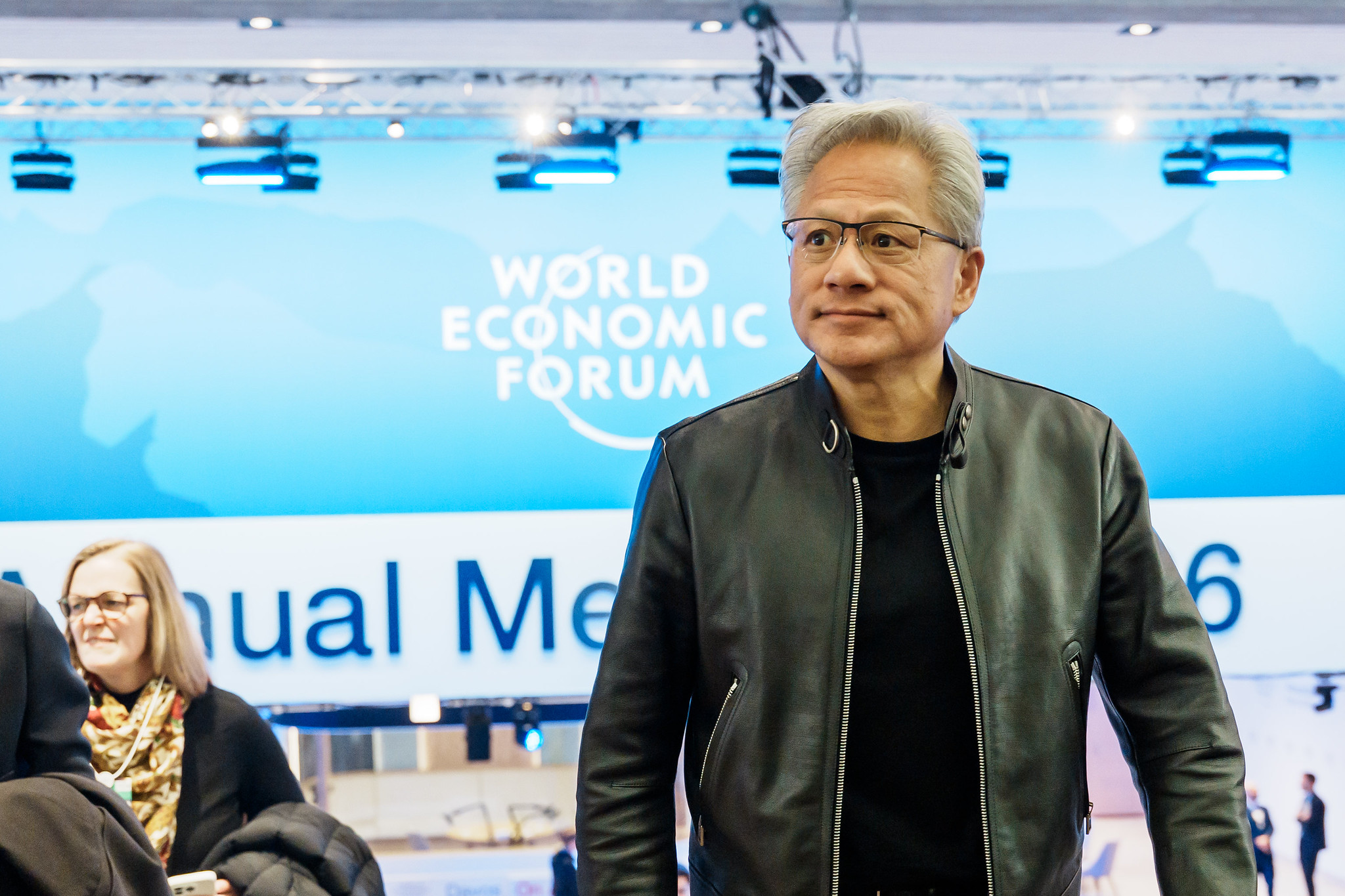
Jensen Huang is back in charge of Nvidia, less than two weeks after he resigned as chief executive over an affair with a woman alleged to be a Chinese spy.
The chipmaker’s board said on Monday it had “voted unanimously” to reinstate him, effective immediately, after a series of meetings with Huang and “input from senior levels of the United States government”. Nvidia’s shares closed about 31% higher, setting off a rally in technology stocks around the world.
President Donald Trump said he was behind the decision. “I made the deal,” he told the US broadcaster CNBC, prompting anger from Republicans and Democrats alike.
Trump said he had spoken to Nvidia’s board and “convinced” its members to bring Huang back. Asked whether it would have happened without him, he said: “The answer is no. I believe my intervention was very important.”
He said the board had asked for guarantees that Huang was not a threat to national security. “And we gave them assurances, at least with everything we know,” he said. “We believe he’s fine. He’s absolutely fine.” The White House said the government had “no reason to believe” Huang’s return posed a security risk.
Trump had pushed publicly for the move. On Sunday he wrote that rehiring Huang “would be the best thing for the Company, and also, for the USA”.
The president also has a personal financial stake. According to his government financial disclosures, he has bought Nvidia shares worth between $23m and $86m over the past two years, and sold part of that holding. Their value would have fallen when Huang resigned and risen on his return. The White House says Trump’s accounts are managed by third-party institutions, not by the president himself.
The president’s role drew criticism from both parties. Republican senator Pete Ricketts said Huang’s behaviour “does not support reinstatement”. Republican congressman Don Bacon said Nvidia should have “ignored the Administration’s inexplicable desire to save Huang”, adding: “We cannot say we want to win the AI race and then give China our best technology.”
Democrats went further. Senator Chuck Schumer accused Trump of “putting his own financial interests and the needs of his billionaire buddies before our national security”. Senator Ruben Gallego called for an investigation into “what stock positions took place before the announcement”.
Jim Himes, the senior Democrat on the House Intelligence Committee, said he had “very little confidence” in the president’s security assurances. “Under no circumstances should a president of the United States be meddling in a corporate board of directors’ decision,” he said.
Not every Republican was critical. Congressman Michael Baumgartner said Trump had acted because advanced chips were among “the most important economic and national security tools of the day”. “In some case you could take these as the new nuclear weapons,” he said.
Huang is due to testify before the Senate Banking Committee on 3 December in a hearing on US export controls, and is expected to face questions from the House Foreign Affairs Committee. Senator Elizabeth Warren, who takes over the banking committee in January, said Huang and Nvidia “still owe Congress answers”.
Staff at Nvidia’s California headquarters greeted Huang with chants of “Jensen! Jensen! Jensen!” on his return. In a short speech, he apologised “for putting you through all of this” after making “some very terrible mistakes”.
“Thank you all for the second chance,” he said. “I’m going to be a better CEO the second time around.”
His fall and return took less than four weeks. Reports of the affair emerged on 29 October, and Trump said on 9 November that the FBI was investigating, adding that Huang told him he had no idea the woman was a spy. Huang resigned on 12 November; he was also accused of an affair with a colleague. Nvidia launched an independent investigation and, on 17 November, set up a board committee to oversee its national security policies.
Some governance experts said the board had made a serious error. “Any other employee who acted in this manner would be terminated,” said Charles Elson, founding director of the University of Delaware’s Weinberg Center for Corporate Governance. He called the idea that only Huang could run Nvidia “frankly absurd”.
Himes questioned whether the promised investigation could have been completed so quickly. Bank of America told clients that “reinstatement should not be confused with the end of scrutiny”.
Nvidia’s 31% jump on Monday helped lift the technology-heavy Nasdaq index in New York by 6.5%. On Tuesday the rally spread to Asia: South Korea’s Kospi rose about 6%, Japan’s Nikkei about 4%, and Taiwan’s Taiex closed 9% higher.
Taiwan had been hit hardest by Huang’s departure. Its main index fell 17.5% last week, its worst week since 1991. Chipmaker TSMC, which makes Nvidia’s most advanced processors, accounts for about 40% of the index.
Europe was more muted. London’s FTSE 100 rose 1.3% in early trading on Tuesday and Paris edged up, but Frankfurt’s Dax slipped. European markets have far fewer technology giants, so they were spared the worst of last week’s falls and gained less from the rebound.
The rally may not last. Nvidia’s shares fell almost 4% before the US market opened on Tuesday, and other chipmakers also dipped.
The swings show how much rides on one company. Nvidia not only sells the chips that power artificial intelligence, but also invests in many of its own customers, including Meta, SpaceX and OpenAI, creating a web of deals across the industry. Analyst Ray Wang of Constellation Research said: “We now know what one man is worth in the industry.”