

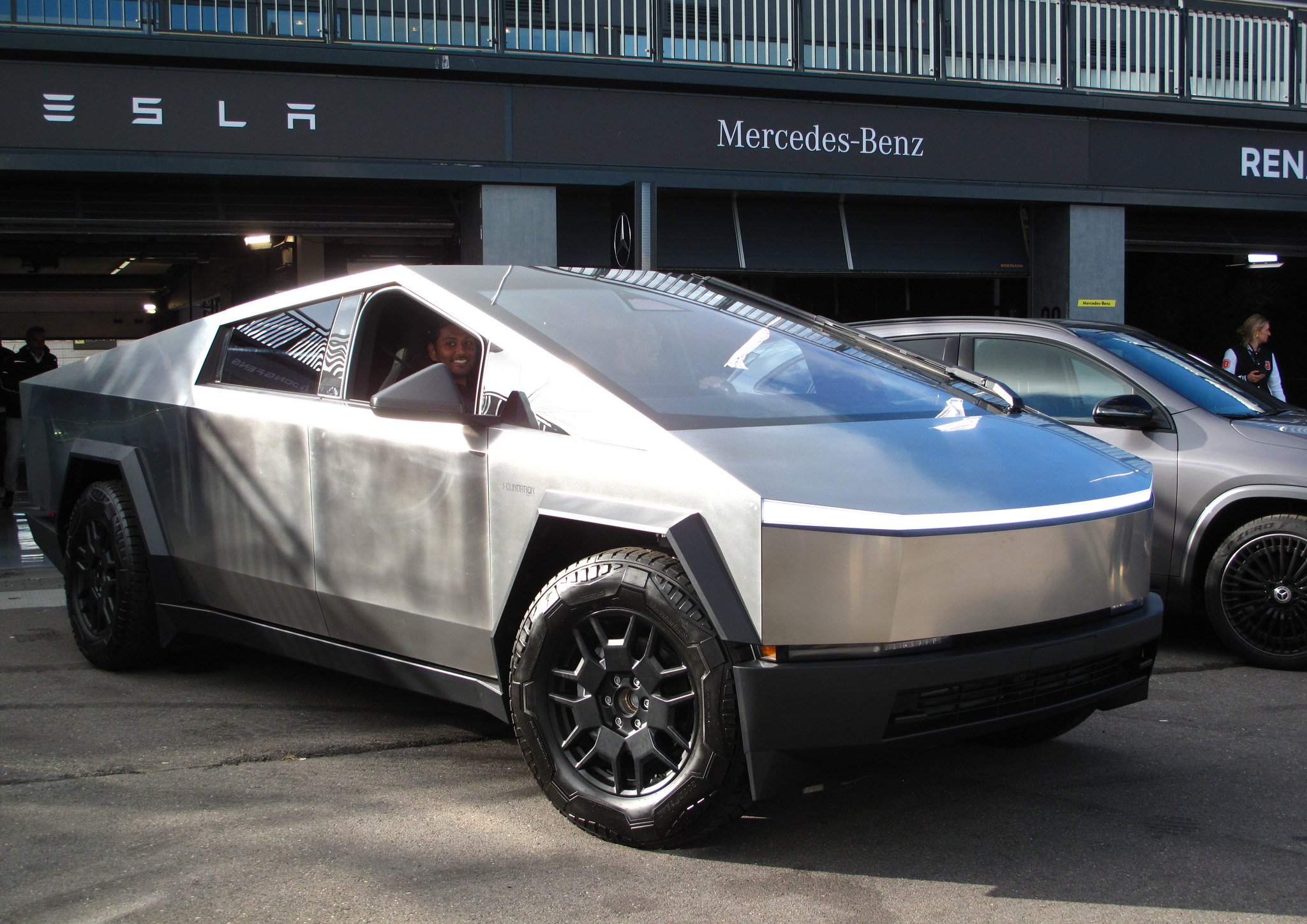
Elon Musk says production in Texas will wind down around the middle of next year to free up space for the Cybercab robotaxi. US sales of the stainless-steel pickup fell by almost half last year.
Tesla will wind down production of the Cybertruck at its Texas factory around the middle of next year, chief executive Elon Musk has said, after years of weak sales for the angular electric pickup.
Musk said on X that the move would free up capacity for Tesla’s Cybercab, the self-driving robotaxi he has made central to the company’s future.
He did not say whether Cybertruck production would move elsewhere or end altogether. Tesla’s Austin plant is the only known factory equipped to make its specialised parts.
The project’s lead engineer, Wes Morrill, appeared to suggest the model was being discontinued. “Cybertruck was an incredible technology development platform and lives on through Cybercab,” he wrote on X.
When a fan called it “the best vehicle Tesla has ever made”, Musk replied “true”, adding: “But the Cybertruck fleet will be around for a long time.” He also described the wind-down as the “end of an era”.
Tesla sold 20,237 Cybertrucks in the US last year, down 48% from 38,965 in 2024, according to Kelley Blue Book. Around the start of production in 2023, Musk had predicted annual sales of 250,000.
One of its biggest customers was Musk’s own SpaceX, which bought Cybertrucks worth $131m at list price in 2025, according to its stock market listing documents.
“It doesn’t make sense to keep it going when it’s not meeting its targets,” said Andy Palmer, a former chief executive of Aston Martin. “It will no doubt only be a rounding error on Tesla’s balance sheet, but the statistics speak for themselves.”
Automotive analyst Felipe Munoz said electric pickups from Ford and others had also struggled. “All of them lost the competition because electric pick ups aren’t popular in the US,” he said.
The Cybertruck’s problems began at its unveiling in 2019, when Musk tried to show its windows were shatterproof by having metal balls thrown at them, only for two of them to crack.
Musk said at the time that the vehicle had received 146,000 orders. It eventually went on sale in late 2023, with Musk promising that “finally, the future will look like the future”.
Since then, Tesla has issued 11 recalls for the Cybertruck, according to the US National Highway Traffic Safety Administration. They included a 2025 recall of more than 46,000 vehicles over concerns that a piece of exterior trim could fall off.
Price was another obstacle. At launch, Tesla said its cheapest version would cost about $61,000. The top-of-the-range Cyberbeast now costs $102,000.
The pickup’s sharp-edged stainless-steel body also kept it out of markets such as Europe, where electric vehicles are more popular. Rules on how vehicles protect pedestrians in a collision made approval impossible.
“Anywhere where you have crash regulation that takes into account pedestrian impact, that Cybertruck won’t go, can’t go,” Palmer said.
The Cybercab, which has butterfly doors and no steering wheel, pedals or mirrors, is at the heart of Musk’s plan to turn Tesla into an AI and robotics company rather than just a carmaker.
Tesla began offering paid rides in a small fleet of Cybercabs in Austin in September, and lists installed capacity for more than 125,000 of the two-seaters. About 570 of the more than 1,200 Tesla robotaxis operating in Texas are Cybercabs, according to the state’s Department of Motor Vehicles.
However, the US road safety regulator opened an audit in September into whether Tesla properly self-certified the Cybercab as meeting federal safety standards.
The announcement caps a difficult week for Musk. His record spending of nearly half a billion dollars on the US midterm elections failed to secure wins for most of the Republicans he backed, and his companies were on course to lose more than $370bn in combined stock market value over the week.