

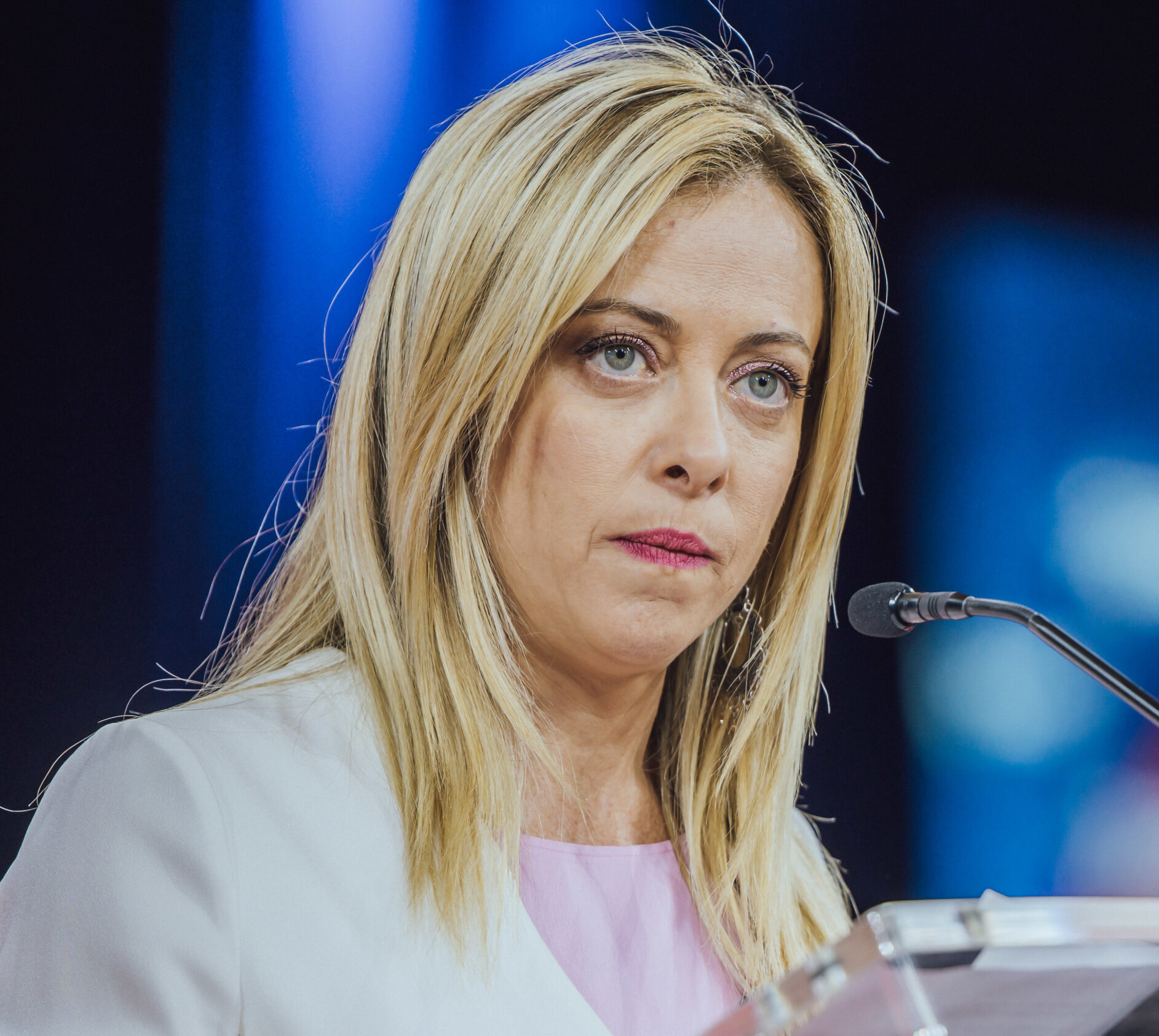
In a letter to European Council President António Costa, the Italian prime minister says rival negotiating formats are making Europe “less credible” and wants leaders to agree who speaks for the bloc.
Italian Prime Minister Giorgia Meloni has warned that Europe risks becoming irrelevant in Ukraine peace talks unless it stops running competing diplomatic initiatives and agrees on a single representative.
In a letter to European Council President António Costa on Thursday, Meloni said the EU was giving the impression of being “all over the place” on Ukraine.
“Europe needs to speak with a single voice on the Ukrainian question. This need can no longer be postponed,” she wrote.
Meloni said the number of different formats being used to discuss the war was “undermining our credibility in handling one of the most complicated issues our nations are facing”.
“Proceeding in a disorganised manner, with initiatives that chase one another and overlap, will not help us, neither with our partners nor with those we must convince to stop this senseless aggression,” she wrote.
“By projecting the image of a Europe that’s all over the place, we’re doing nothing but serving the interests of those who want this war to continue,” she added. “And I think this is unacceptable, given that human lives and the future of our security are at stake.”
In the letter, Meloni listed the overlapping groups and initiatives. They include an informal meeting in Miami in October involving national security advisers from some European countries, Ukraine, NATO and the EU, as well as talks in Oslo.
She also pointed to the E3 group of Britain, France and Germany; the Coalition of the Willing, which brings together 37 European and non-European states; the Berlin format, made up of Germany, France, Poland and representatives of NATO, the G7 and the EU; and the European Political Community.
She also cited a phone call to Russian President Vladimir Putin last month by Finland’s President Alexander Stubb and Norway’s Prime Minister Jonas Gahr Støre.
Officials from the E3 met representatives of the US and Ukraine in Brussels this week to discuss how to end the war.
Meloni stressed that she was not seeking a place at the table for herself or for Italy. “I am not asking for a seat for Italy in this or that format,” she wrote.
But she said Rome would not accept commitments being negotiated on Europe’s behalf without an EU mandate.
Italy has been left out of several recent meetings. It was not part of the talks in Miami in October or in Brussels this week, though it did attend the Oslo talks at Norway’s invitation, where an Italian national security adviser joined a working dinner in place of France.
Meloni wants EU leaders to discuss the issue at an informal European Council in Dublin on 13 November, a day after a meeting of the European Political Community.
She wants a formal decision on who should represent the bloc, and with what mandate, at a summit in December, after coordination with Britain, Norway and other European partners.
Italy has led calls for the EU to appoint a special envoy for Russia-Ukraine peace talks since Meloni first floated the idea in January. France, Austria, the Czech Republic and Luxembourg have also backed the proposal.
Ahead of last month’s EU summit, Italy’s foreign minister, Antonio Tajani, said Europe needed “a spokesperson who can negotiate” and a “univocal position”, warning that otherwise EU foreign policy would look weak.
Meloni is under pressure in Italy, where opposition parties accuse her government of being irrelevant on the international stage. Some political forces, including within her governing coalition, are also urging an end to military aid for Ukraine.
The letter comes days before Ukrainian and Russian negotiators are due to meet in Abu Dhabi on 10 and 11 November for US-mediated talks on security arrangements and de-escalation.
The EU has repeatedly insisted it must have a seat at the table in peace talks, to protect Europe’s interests and help Ukraine resist a lopsided deal. It has yet to agree on a single leader or institution to lead its negotiations.