

The Cannes Film Festival and more than 200 film-makers, actors and festival directors have condemned a new prison sentence for the Iranian director Jafar Panahi, who won the Palme d’Or last year.
Tehran’s Revolutionary Court has sentenced Panahi to five years and one month in prison, according to Cannes and the film-makers’ statement. The court also ordered the confiscation of his assets and imposed a two-year ban on leaving Iran and a two-year ban on using social media.
The 66-year-old director has been prosecuted repeatedly over his films, but has always refused to leave Iran.
In a statement on Tuesday, Cannes said it “strongly condemns the judicial persecution of Jafar Panahi” and called for all restrictions on his travel, work and expression to be lifted.
The festival urged artists, festivals and cultural institutions around the world to “speak with one voice to prevent his imprisonment”.
“His freedom is not just about one filmmaker, it is about the rights of all artists to think, create, and express themselves without fear of imprisonment,” it said.
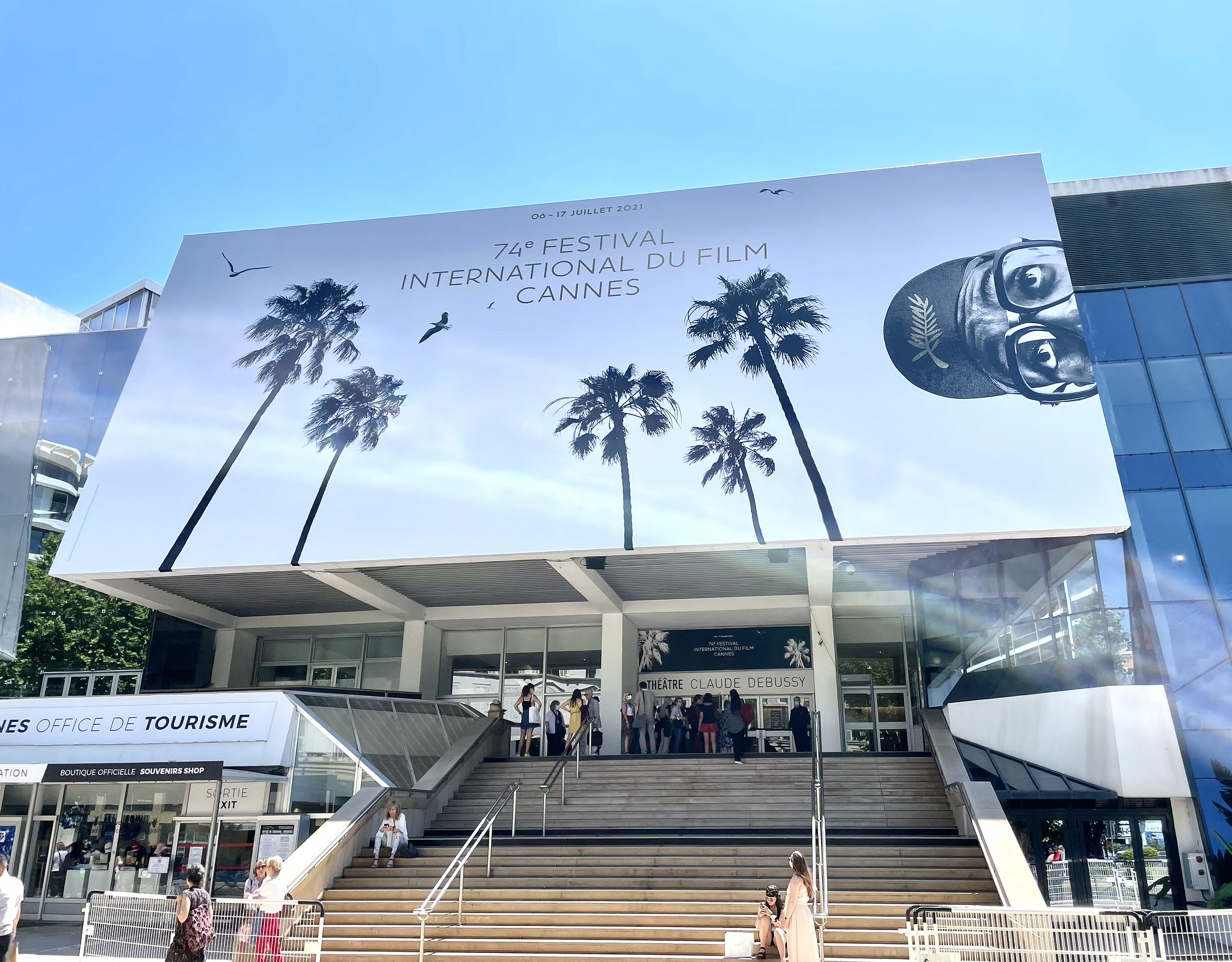
Cannes has a long connection with the director. When Panahi was invited to sit on its jury in 2010, he was in prison in Iran, and his seat was left empty at the opening ceremony. Fifteen years later, he collected the Palme d’Or in person for It Was Just an Accident.
A separate statement, organised by the International Coalition for Filmmakers at Risk, has so far been signed by more than 200 people and institutions. They say they are “deeply concerned” by the sentence.
The signatories include actors Mark Ruffalo and Tilda Swinton, directors Michael Moore, Barry Jenkins, Alex Gibney, Jacques Audiard, Olivier Assayas and Apichatpong Weerasethakul, and British film-makers Asif Kapadia, Nick Broomfield and Mark Cousins.
The heads of several major festivals have also signed, including Venice’s Alberto Barbera, the Berlinale’s Tricia Tuttle, and the directors of the Locarno, Rotterdam, New York, Telluride and Karlovy Vary festivals.
“His films have bridged critical gaps in understanding between the world and the Iranian people for the last 30 years,” the statement says.
It calls on the court to reverse the sentence and to respect the International Covenant on Civil and Political Rights, which Iran has signed. “We stand in solidarity with Mr Panahi and all Iranians facing persecution for their work at the hands of their own government,” it adds.
This is not Panahi’s first sentence. Last December he was sentenced to one year in prison and a two-year ban on leaving Iran, and a third case connected to his film-making is still under way.
He was first arrested in 2010 and given a six-year prison sentence and a 20-year ban on making films, yet continued to make them in secret. He was detained again in 2022 and freed in early 2023 after going on hunger strike.
According to the film-makers’ statement, Panahi returned to Iran in March this year, “aware of the risks but having always spoken of his deep love for his country”. Cannes said he had always refused exile, believing he must stay in Iran and keep working.
Panahi is one of very few directors to have won the top prize at all three of Europe’s biggest film festivals: Venice’s Golden Lion for The Circle in 2000, Berlin’s Golden Bear for Taxi in 2015, and the Palme d’Or at Cannes for It Was Just an Accident in 2025. His debut, The White Balloon, won Cannes’ Caméra d’Or for best first film in 1995.
His other honours include Berlin’s Silver Bear for Offside in 2006, the Un Certain Regard jury prize at Cannes for Crimson Gold in 2003, Cannes’ best screenplay award for 3 Faces in 2018, and a special jury prize at Venice for No Bears in 2022.
Like several of his recent films, It Was Just an Accident was shot in Iran without official permission.