

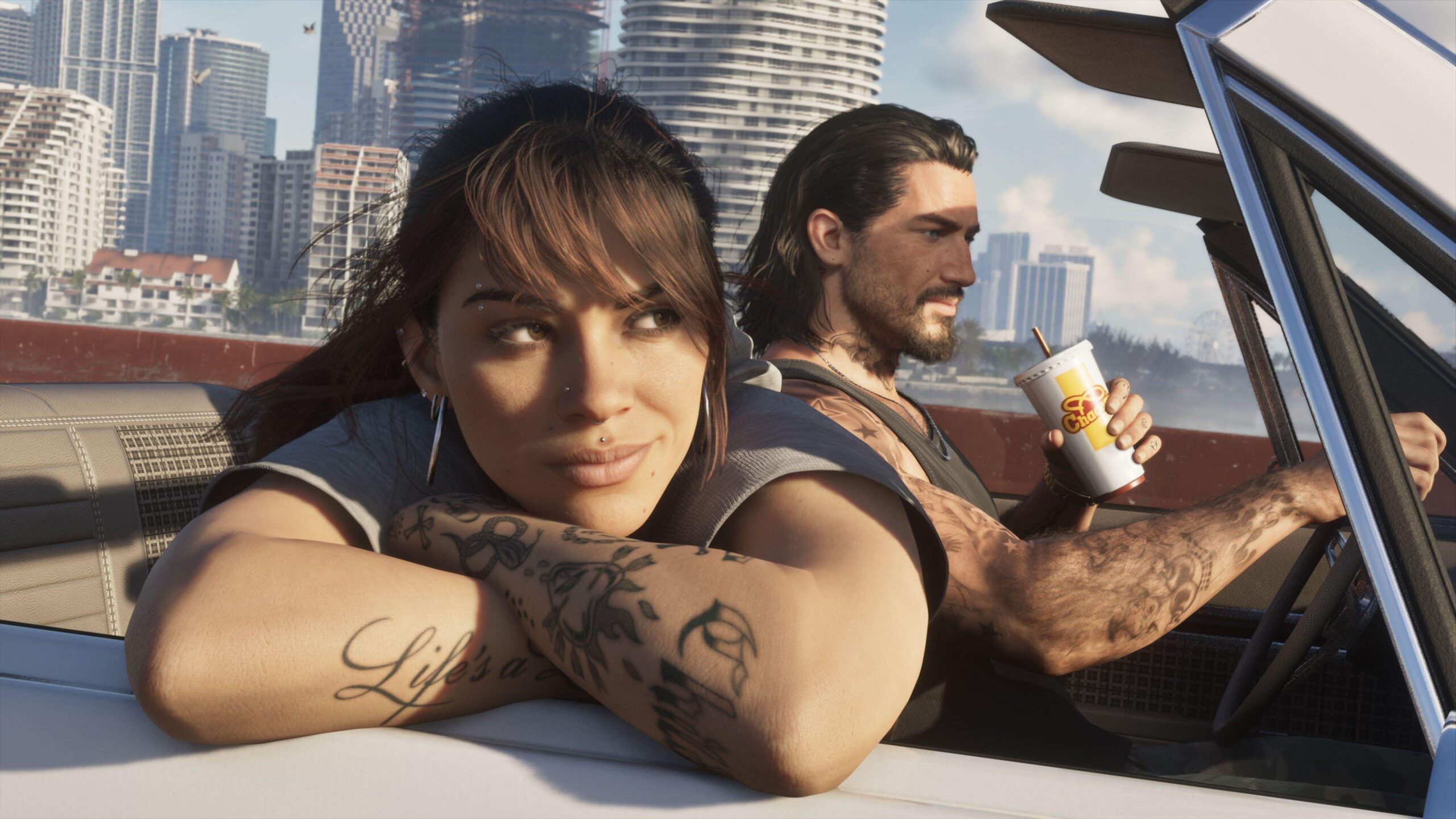
Sales records, “GTA flu” and talk of a masterpiece. But a game fans waited 13 years for, at a reported cost of $1bn, is being judged on its hype rather than on what it is.
This week, the world lost its mind over a video game. PlayStation’s network buckled under the weight of downloads. Offices emptied as people came down with “GTA flu”. Grand Theft Auto 6 reportedly took billions of dollars in its first 24 hours, $3.79bn by one estimate, making it the biggest entertainment launch in history. Critics gave it 99 out of 100 on the review site Metacritic, the highest score any game has ever received.
I don’t doubt that GTA 6 is a good game. The detail is astonishing, the world is vast, and the satire of Florida excess has plenty of bite.
But “good” is not what the world has been told. It has been told this is a cultural event on the scale of a World Cup. That claim deserves some scepticism.
No game could be worth a 13-year wait. That is not a criticism of Rockstar’s designers; it is simple arithmetic. Fans have spent more than a decade imagining the perfect GTA, and the real one can only disappoint by comparison, or be praised beyond its merits by people who need the wait to have been worth it.
The record first-day sales tell us something, but not what we’re told they do. They measure anticipation, brand loyalty and a marketing machine that has run for years. They say nothing about whether the game is better than the ones that came before it. People bought GTA 6 on day one because it was GTA 6, not because they had played it.
And the frenzy has a cost. When a single game can take down a console network, empty workplaces and dominate front pages for days, it squeezes out everything else, including the far more inventive games that will never get a fraction of the attention.
The strongest evidence that GTA 6 is overrated comes from the people playing it. Critics on Metacritic have given it a record 99 out of 100. Players’ average score on the same site is about 5 out of 10, after almost 10,000 reviews.
Some of that gap is not worth taking seriously. A loud group of players has review-bombed the game because it drops the option to pay for sex workers and won’t let you cheat on your partner. Their complaints about a “woke” makeover say more about the complainers than about the game.
But not all the criticism is culture war. On consoles the game runs at 30 frames per second, with no smoother 60fps option, and players report the frame rate dipping in busy scenes. Even reviewers who loved it describe the combat as clunky. Some fans object to a pricier Ultimate Edition that locks in-game shops and cosmetics behind a paywall.
One of the most measured reviews came from Jonathan Ore, who spent nearly 70 hours in the game for Canada’s CBC News. Beyond its “impossibly lavish presentation”, he concluded, it is “mostly a familiar formula with some smart additions”. The big story missions feel “more like you’re strapped into an amusement park ride than an active participant”, and much of the supporting cast is “a parade of one-dimensional racial or regional stereotypes”.
A familiar formula, beautifully presented, with clunky combat and a cast of caricatures: that is a very good game. It is not a 99.
The 13-year gap is often presented as proof of craftsmanship, as if Rockstar spent every one of those years perfecting a work of art. There is a less romantic explanation.
GTA V, released in 2013, became one of the best-selling games ever made, with more than 200 million copies sold, and its online mode kept earning money year after year. A company with a product that profitable has little reason to hurry its replacement. Fans did not wait 13 years because greatness takes that long. They waited because the old game was still paying the bills.
That is a perfectly rational business decision. But it is not something to celebrate, and it should not earn the new game extra credit.
Much of the praise is about size. The map is twice as large as GTA V’s and nearly as big as the real Miami. There are side missions for fixing leaking roofs, buying flowers and turning up on time for a couples’ bank appointment. One critic was moved by a dolphin.
Scale is impressive, but it is not the same as fun. A world that takes dozens of hours to explore is also a world that asks for dozens of hours, and some of those hours look a lot like chores. Nor is it easy going for everyone: one 67-year-old fan said the changed controls left him struggling, and he only finished his first mission the next morning.
Compare that with the rest of the industry. Series such as Call of Duty and EA Sports FC put out a new instalment every year. They are often accused of being samey, and fairly so. But they give players something new to play regularly, and studios keep learning from each release. Meanwhile, small independent teams regularly produce fresher ideas on a tiny fraction of GTA’s budget.
A thirteen-year cycle is not a model the rest of the industry should envy. It concentrates enormous risk, and enormous expectation, on a single release.
To be fair to GTA 6, its admirers have a point. Critics have been genuinely awed by its detail, and plenty of players, from teenagers to pensioners, are clearly having a wonderful time. Some of the moments that sound like chores on paper, such as wandering a beach at sunset or diving for treasure, are exactly what fans say they love: a game that rewards slowing down.
Rockstar says everything in the game was built to serve the story of “a couple in a bind, lovers on the run”. Dropping the option to pay for sex workers, one of the most criticised features of the last game, may also be widening its audience: by one estimate, women will make up around four in ten of its US players, up from one in eight for GTA V.
None of that is a reason to stop playing. It is a reason to keep things in proportion.
GTA 6 may well be the best game of 2026. It is almost certainly the most expensive and the most talked about. But the greatest game ever made? That is a verdict best left until the hype has faded and the sales figures stop doing the talking.
Ask again in 13 years.